
穆赫兰道
方寸彩票,幸会华夏千年丹青_我的网站

一 | 笔墨藏山河,石镌刻风华。
Chinese scientists have developed a “brain-reading” AI model that could help predict the risk of depression among adolescents up to four years in advance by analyzing how humans respond to facial expressions, a technology expected to inspire future development of embodied intelligent humanoids capable of perceiving human emotion and thoughts through nuanced facial cues.
WHO data show that around 332 million people worldwide have depression, about one-third of whom have treatment-resistant forms of the condition. In China, an estimated 95 million people suffer from depression, National Business Daily reported, citing statistics from the China Mental Health Survey.
Using data from a population-based longitudinal adolescent cohort recruited across several European countries, the research team led by Lu Han, assistant professor at the School of Artificial Intelligence, Shenzhen University, has built an AI model that predicted which 19-year-olds were more likely to develop depression at the age of 23. The predictions were backed up by an independent clinical cohort of individuals with depression. The team’s paper was published in the journal Science Advances this month.
According to Lu, the study used brain scans taken at age 19 to predict depression-related symptoms at age 23. The study focuses on adolescence because the transition from adolescence to early adulthood is a key developmental period when depressive symptoms can increase rapidly. The earlier risks are identified, the greater the opportunity for prevention, Lu told the Global Times on Monday, adding that the findings need to be further validated in middle-aged and older adults and across different ethnic groups in future research.
In this study, the researchers analyzed data from adolescents in the IMAGEN, a population-based longitudinal cohort recruited across several European countries. At age 19, participants underwent an fMRI emotional-face task, and their emotional symptoms were assessed using standardized questionnaires. Genetic data obtained from blood samples were also analyzed, and participants were followed up at age 23. The researchers examined whether neural representations of angry faces at age 19 were associated with emotional symptoms and could predict elevated emotional symptoms four years later.
According to Lu, people without depression can more easily distinguish emotional changes based on others’ facial expressions and respond accordingly – for example, responding with friendliness to a smiling expression. But people with depression cannot do this, and are more likely to assume people are angry with them.
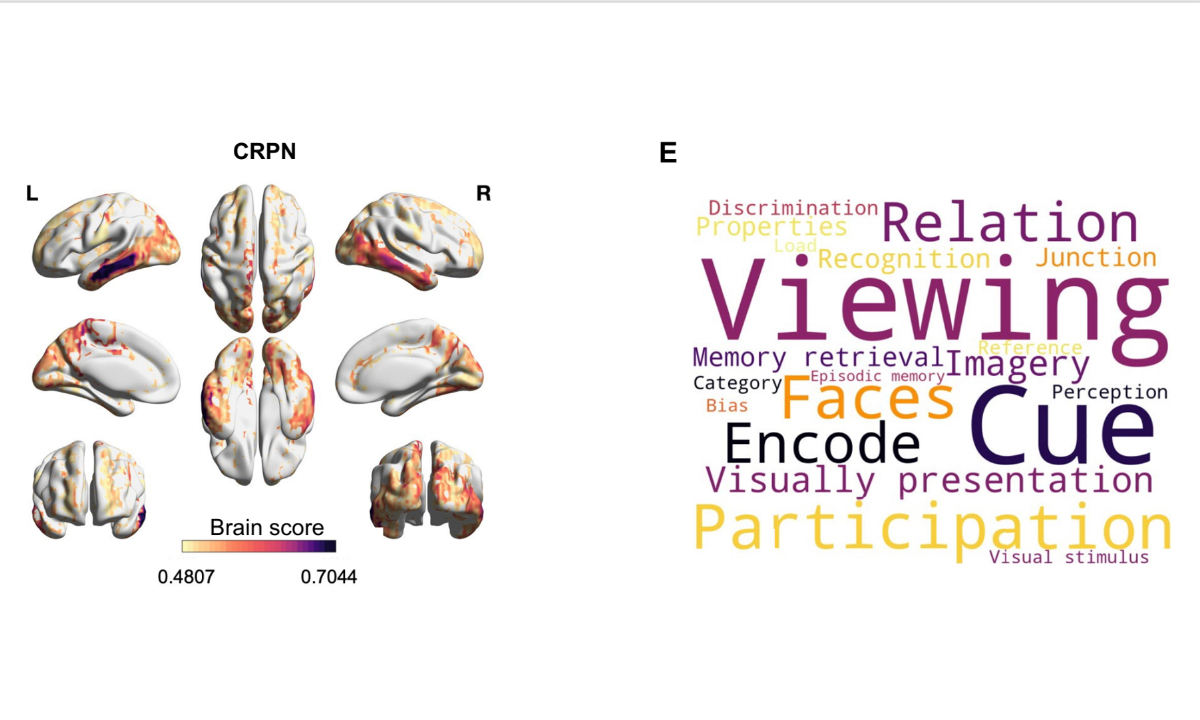
A brain-aligned deep-learning model developed by Lu’s team suggested that those participants whose brains were less able to distinguish between different facial emotions and tended to perceive others as angry were more likely to develop symptoms of depression and anxiety in adulthood.
The hypothesis that adolescents at risk of depression may respond differently to other people’s facial expressions than those without such risk based on the negative information processing bias long observed in depression research: people at risk of depression are more likely to notice, interpret, or remember negative social information, Lu said.
The researchers focused on angry facial expressions because they signal social threat and rejection, which are closely linked to interpersonal difficulties and negativity bias associated with depression. They hope to further understand how this bias develops within the visual system.
Building on this, they created a deep learning model, which mimics how the brain processes visual information, to predict how the brain encodes abstract emotional concepts such as anger.
They found that 19-year-olds whose response to facial expressions was skewed in favour of negative emotions or memories were the most likely to develop some form of depression.
Based on these findings, Lu’s team then developed a marker that can identify possible warning signs.
According to Lu, the study found that the computational biomarker was linked to the depression-related variant rs11123030 and polygenic risk for depression, suggesting that genetic susceptibility may affect emotional perception. It also provided predictive information beyond family stress and socioeconomic factors, complementing rather than replacing environmental risk factors. Therefore, depression is neither purely genetic nor purely psychological, but a complex mental disorder arising from the interplay of genetic susceptibility, brain development, emotional and cognitive processes, and life experiences.
According to Lu, the study is also expected to advance AI by aligning deep neural networks with human brain activity and using parameter perturbations to probe neural mechanisms, allowing models to both predict and explain how biases may arise.
The findings suggest that future affective computing and embodied AI should go beyond simply labeling facial expressions, incorporating visual details while preventing prior assumptions from overriding real-time sensory input, Lu said, adding that the findings could provide valuable insights for developing more interpretable robotic perception systems that more closely emulate the way humans process emotions.
。

二 |
中华古画里的
每一笔勾勒、每一色晕染,
都藏着古人的审美意趣与生活哲思。
从唐代的雄浑质朴,到五代的细腻灵动,
再到宋代的雅致隽永,
这些传世名作历经千年时光洗礼,
依旧在千百年后的今日熠熠生辉。福利彩票将这些艺术瑰宝
融入刮刮乐的票面设计,
不仅让古老书画走出博物馆,
更以创新形式为传统文化注入活力。

三 | 一纸唐画,耕耘千年祈愿画作小科普: 《五牛图》为唐代宰相韩滉唯一传世真迹,现收藏于北京故宫博物院,位列中国十大传世名画之一。

四 | 画卷仅绘五头神态迥异的黄牛,线条粗劲质朴,设色清淡沉稳,尽显唐代写实绘画的高超水准。 传统文化中,“五牛”对应五福、五谷,象征勤恳踏实、岁岁丰盈。韩滉深耕民生政务,深谙农耕为立国之本,绘五牛寄托五谷丰登、百姓安乐的美好期许。 这幅国宝命运跌宕,清末流失海外,上世纪50年代经国家重金购回、修复,才得以重回故土完整留存,承载着国人守护文脉的赤诚之心。《五牛图》主题刮刮乐: 整套票面以原作五牛形象为核心,串联商甲骨文、西汉帛书等历代“牛”字书法,搭配唐宋清咏牛诗词、传统篆刻闲章,古今笔墨首尾呼应、浑然一体。

五 | 牛,是农耕文明的图腾,一生勤恳耕耘、默默奉献,与福彩深耕民生、默默行善的公益底色遥相呼应。

六 | 一张小小的刮刮乐,一边复刻唐代国宝笔墨,一边传递丰收向善的美好祝愿,让千年农耕文化与当代公益温暖相融。

七 | 一卷长卷,尽显五代风华画作小科普: 《韩熙载夜宴图》宋摹本为国家一级文物,现藏北京故宫博物院。原画卷由南唐画院画师顾闳中奉旨创作,以目识心记之法,完整记录南唐名臣韩熙载夜宴宾客全过程。 画卷以屏风自然分割,分为听乐、观舞、休憩、清吹、送客五大连贯场景,四十余位人物神情、衣饰、器物刻画入微。

八 | 该画作不仅是艺术珍品,更是研究五代服饰、礼乐、家具、社会风貌的活史料,于细腻笔墨间藏着乱世文人的沉郁心事,人物叙事手法深刻影响后世人物长卷创作。《韩熙载夜宴图》主题刮刮乐: 整套四张票面首尾相连,四联票连起来便是一幅完整的国宝长卷,承载着五代时期兼容并蓄的人文气韵。

九 | 方寸票面复刻传世工笔,让大众不必专程赴故宫,就能读懂千年前的礼乐宴饮文化。

十 | 一石浮雕,奏响大唐乐声画作小科普: 彩绘散乐浮雕1995年出土于河北曲阳王处直墓,为五代汉白玉石雕,是唐代散乐文化最完整的实物遗存之一。 浮雕长1.36米、高0.82米,共刻画15位乐伎人物,前排乐女弹奏箜篌、琵琶、拍板、大鼓,后排演奏横笛、筚篥、方响等十余种古乐器,人物丰腴温婉,衣袂披帛飘逸灵动,完整还原盛唐宫廷女子乐队演奏盛况,被称作“千年前的女子十二乐坊”。 散乐是隋唐民间通俗乐舞,融合中原与西域音律,见证大唐开放包容的文化格局。曲阳汉白玉浮雕雕刻技法圆润细腻,敷彩温润,是北方石雕艺术的标杆。

十一 | 《唐潮-新彩绘散乐浮雕》主题刮刮乐: 在深度考究唐代乐女妆容、襦裙形制与古乐器原貌的基础上,票面采用新国潮绘画风格对原石雕进行了二次创作,保留了石雕原作人物排布,将冰冷石刻转化为鲜活灵动的国风插画,让人一眼便能读懂大唐乐舞的浪漫风情。 福彩将千年石刻搬上票面,让沉寂石头上的古乐重焕生机,让石刻文物走出展馆,以年轻化、潮流化的方式传播传统礼乐文化。一壁壁画,再现盛唐威仪画作小科普: 《阙楼仪仗图》出土于唐懿德太子李重润墓,为一级国宝壁画,现收藏于陕西历史博物馆。 墓道壁画分为阙楼与仪仗两大板块:巍峨的三重子母阙宏伟庄重,仪仗队伍包含骑兵、文官、侍卫近两百人,旌旗浩荡、车马整齐,完整还原盛唐皇室出行的盛大场面。壁画线条工整、色彩富丽,填补了唐代宫殿建筑图像史料空白,古建筑学界复原唐长安大明宫,均以此壁画为重要参考依据。

十二 | 《唐潮-新阙楼仪仗图》主题刮刮乐: 以壁画原作构图为基底,运用新国潮国风重绘皇家阙楼与浩荡仪仗,红金配色恢弘大气,马匹、将士、宫阙层次分明,尽显盛唐雄浑开阔的时代气质。 这幅壁画是大唐盛世的视觉缩影,藏着盛唐包容强盛的时代底气。通过方寸刮刮乐的复刻,将厚重的唐代建筑、礼制文化融入日常消费场景,让恢弘的盛唐气象走进街头巷尾,以通俗载体讲述盛世历史,传递恢弘自信的中华文脉精神。从唐代纸本古画到五代传世长卷,
从曲阳石刻浮雕到盛唐皇家壁画,
让藏在深馆中的国宝
走出高墙,飞入寻常百姓家。

十三 |
一张小小的福利彩票,
承载着跨越千年的笔墨风华,
坚守的是数十年不变的公益底色,
让你在笔墨丹青、石刻风华间读懂华夏文明,
也在每一次购彩中,
传递向善而行的公益力量。
Current article:http://0cp4p.dingruorenhongqiaminmeipeiliu.cyou/fxh/qrhp.html
Published on:06:31:20
评论
-
关于我们 | 我的网站 版权所有
Copyright ? 2019 我的网站 All Rights Reserved